Why You Lose Water Weight First on Low Carb - and Why It Comes Back
Quick Answer: Cutting carbs hard empties your glycogen stores - the carbohydrate your muscles and liver keep on hand - and every gram of glycogen is stored with roughly three grams of water. Draining a pound or so of glycogen therefore flushes several pounds of water in week one, which is why low-carb starts feel dramatic and why one high-carb dinner appears to restore the loss overnight. Neither swing is fat. Fat changes at a slower, steadier rate underneath the water noise - and learning to read through that noise is the difference between quitting in week two and actually seeing the diet’s real effect.
Down five pounds in six days, up three after one birthday dinner. Your fat cells did almost none of that. Your glycogen did nearly all of it - and it was just doing its job.

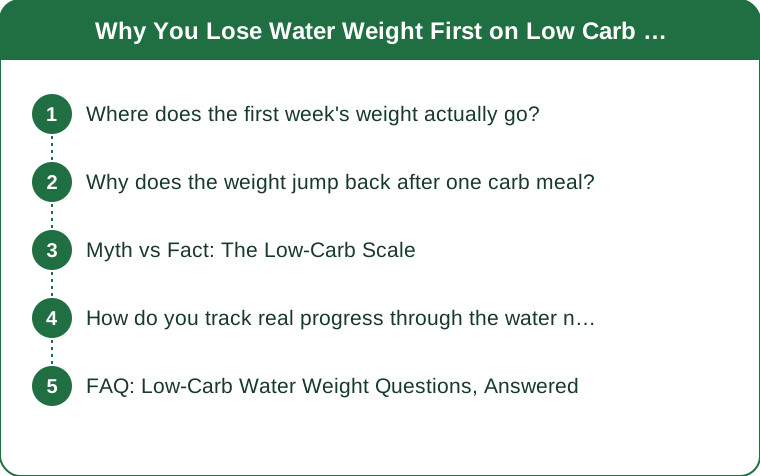
Where does the first week’s weight actually go?
Mostly out of storage tanks, not fat cells - and the chemistry is worth two minutes.
Glycogen is your onboard carb tank. Muscles and liver together hold roughly 400 to 600 grams of glycogen - quick-access fuel for hard efforts and between-meal blood sugar. Cut carb intake sharply and the body drains these tanks over the first several days.
Glycogen is stored wet. Each gram binds about three grams of water as part of its storage structure. Draining 400 grams of glycogen therefore releases well over a kilogram of associated water - flushed out through urine, which is why week one involves noticeably more bathroom trips.
Sodium amplifies the flush. Lower insulin levels signal the kidneys to excrete more sodium, and water follows salt. This second mechanism stacks on the glycogen effect - together they account for the classic three-to-six-pound first week.
Fat loss is happening too - at fat-loss speed. Underneath the water event, an honest calorie deficit burns fat at the same rate it would on any diet - roughly a pound per week per 500-calorie daily deficit. Week one’s scale drop is water sitting on top of a normal, modest fat change.
This is why low carb feels uniquely effective early. The water flush is genuinely motivating - but attributing it to fat sets up week two’s disappointment, when the tanks are empty, the flush is over, and the scale slows to actual fat-loss speed.
Nothing malfunctioned in week two. The diet simply moved from the drainage phase to the fat phase. The people who understand that keep going; the ones who do not go looking for a new diet.
Why does the weight jump back after one carb meal?
Because the tank refills exactly the way it drained - fast, wet, and fat-free.
Carbs restock glycogen within a day or two. A pasta dinner, a birthday cake, a vacation weekend - incoming carbohydrate goes substantially toward refilling depleted muscle and liver stores, and every restored gram brings its three grams of water back with it.
The scale reports the water faithfully. Two to four pounds overnight after a carb-heavy day is textbook refill - and it is metabolically almost meaningless. Storing that much actual fat would require eating roughly 7,000 to 14,000 surplus calories, which one dinner did not contain.
Salt and timing pile on. Restaurant meals add sodium retention on top, and a late dinner means extra food still in transit at weigh-in. The morning-after number is water, salt, and undigested food stacked on an unchanged fat mass.
The refill is not failure - it is often function. Refilled glycogen is why training feels strong again after a higher-carb day; athletes engineer exactly this with planned refeeds. The pump and full-muscle feel after carbs return is the tank doing its job.
The trap is emotional accounting. Counting the water flush as diet success but the water refill as personal failure is the asymmetry that breaks people - same molecule, same mechanism, opposite feelings. Naming it in advance defuses it: the two-pound morning after pizza is the deposit returning, not the fat.
And repeated panic-quitting has a cost. Each quit-restart cycle re-runs the dramatic week-one flush, teaching a false lesson about the diet working until it stops - when the only thing cycling was water.

Myth vs Fact: The Low-Carb Scale
Myth: The first week proves low carb melts fat faster. Fact: The first week proves glycogen is stored wet. Comparisons that control for calories show low carb and other diets producing similar fat loss over months - low carb front-loads a water drop that other diets spread out or skip.
Myth: Gaining three pounds after pizza means the diet failed. Fact: It means your tanks refilled - storing three pounds of fat would need a five-figure calorie surplus. The water arrives overnight and leaves within a few low-carb days. Fat neither came nor went that fast.
Myth: Water weight is fake weight. Fact: The pounds are real mass - they are just not fat, and they cycle with carb intake rather than with your calorie balance. Real, volatile, and not the number the diet is aiming at.
Myth: Daily weigh-ins are pointless on low carb. Fact: Daily numbers are noisy, but weekly averages of daily weigh-ins are the cleanest tracking there is - the average filters the water swings that make any single morning meaningless.
Myth: You should avoid refilling glycogen at all costs. Fact: Chronically empty tanks cost training quality, and hard exercisers on strict low carb often feel it in their sessions. Planned higher-carb days are a legitimate tool - the scale bump they cause is scheduled water, not damage.
Myth: The flush works every time you restart. Fact: It does - which is the problem. Serial restarters chase the week-one drop repeatedly while their fat trend goes nowhere. The flush is a one-time drainage event per cycle, not a fat-loss technique.
How do you track real progress through the water noise?
Tools that read the fat signal underneath the glycogen static.
Weigh daily, judge weekly. Same time, same conditions, every morning - then compare weekly averages, never individual days. A half-pound-per-week average decline through two-pound daily swings is a diet working exactly as designed.
Give any carb change a three-day settling rule. After a refeed, a restaurant night, or a vacation, ignore the scale for three low-carb days while the water re-equilibrates. Judging yourself during the swing is measuring the tide and calling it the ocean.
Add non-scale instruments. A monthly waist measurement and how your clothes fit read fat more directly than the scale reads it - the waistband of your favorite high-waisted leggings is famously honest, because water swings barely move it while fat change does. Photos monthly, in the same light, complete the panel.
Expect the pattern: whoosh and stall. Low-carb progress often arrives in steps - flat weeks, then a sudden drop - likely water masking then releasing. The weekly-average line smooths most of it; patience covers the rest.
Salt, hydrate, and mind the transition. Week one’s flush takes sodium and fluid with it - the low-carb flu of headaches and fatigue is substantially an electrolyte dip. Salting food deliberately and drinking to thirst makes the drainage phase civilized. Persistent dizziness, or any diabetic medication in the picture, moves this from blog territory to doctor territory.
And write week one’s number down with a label. Mostly water, it says - so that week six’s slower, steadier line gets compared to reality, not to the drainage event that opened the show.
General information, not medical advice - anyone on glucose-lowering medication should involve their clinician before big carb changes.
FAQ: Low-Carb Water Weight Questions, Answered
How much of the first week’s low-carb loss is water?
Commonly half to most of it - draining 400-plus grams of glycogen releases several pounds of bound water, stacked on a normal week’s worth of actual fat loss. The dramatic number is real weight, but the fat portion is the ordinary, modest slice.
Why did I gain three pounds overnight after eating carbs?
Your glycogen tanks refilled and brought their water back - roughly three grams per gram of glycogen - plus restaurant sodium and food in transit. Storing three pounds of fat overnight would require an impossible calorie surplus; give it three low-carb days and the water leaves again.
How do I tell water weight from fat gain?
Speed and pattern: multi-pound overnight moves after carb or salt changes are water; fat changes drift in at ounces per day. Weekly weigh-in averages, a monthly waist measurement, and how fitted clothes feel filter the noise reliably.
Does the water weight come back permanently when I stop low carb?
The glycogen water returns once - a few pounds - and then stabilizes; it does not keep climbing. Whether fat returns depends entirely on calories after the diet, not on the water shift itself.
Should I do refeed days if the scale jumps after them?
If you train hard, planned higher-carb days often improve sessions and adherence - and the next-morning bump is scheduled water, gone within days. Judge refeeds by the weekly average and your gym performance, never by the morning after.
TL;DR:
- Glycogen is stored with three grams of water per gram - draining it powers the dramatic first week, refilling it powers the post-pasta rebound.
- Neither swing is fat: fat moves at ounces per day underneath the water noise.
- Track with weekly weigh-in averages, a monthly waist check, and how your clothes fit; give any carb change three days to settle.
- Salt and fluids smooth the transition week; medication users loop in their doctor.
- Refeeds are scheduled water, not failure - judge them by performance and the weekly trend.
The scale is telling the truth - it is just narrating your carb tank, not your fat cells. Read the average, not the morning, and the diet’s real story stays visible.
Keep Reading
This article is for general informational purposes only and is not medical advice. Always consult a qualified health professional for guidance specific to you.