Why Caffeine Hits Harder on a Low Carb Diet
Quick Answer: Several things shift together. Low carb intake often raises cortisol and adrenaline slightly, so caffeine is stacking on an already elevated stress hormone baseline. Sodium and potassium losses in the first weeks amplify the jittery, heart-racing feeling. And caffeine consumed without food is absorbed faster and peaks higher than caffeine with a carbohydrate-containing meal. The dose did not change. The context it lands in did.
You used to have two coffees and think nothing of it. Three weeks into eating low carb, the second cup makes your hands shake and your heart notice.
Nothing is wrong. But a few things changed at once, and they all point in the same direction.

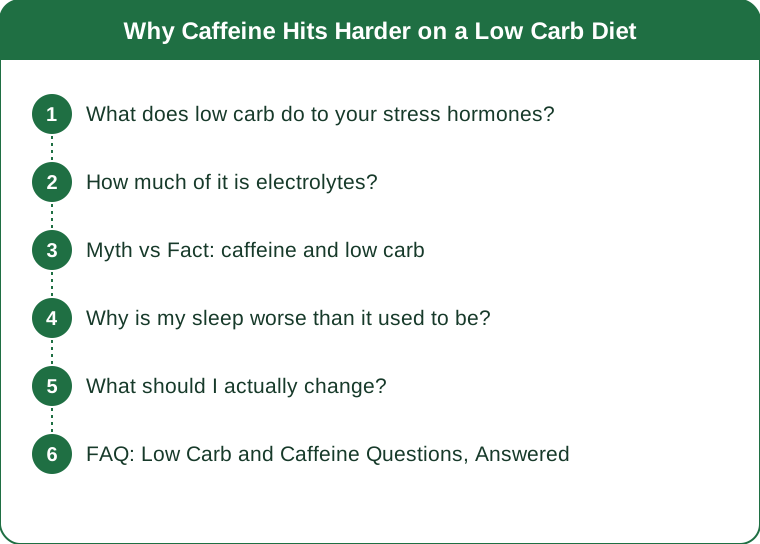
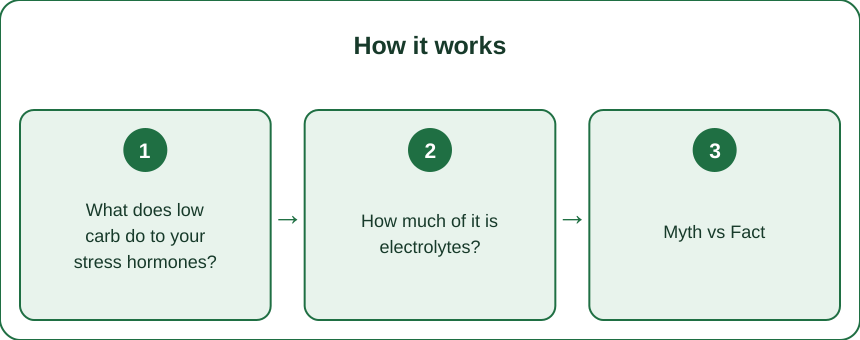
What does low carb do to your stress hormones?
It nudges them upward, at least early on, and that matters for how caffeine feels.
When carbohydrate intake drops, your body has to maintain blood glucose from other sources. Cortisol and adrenaline are part of that machinery, driving gluconeogenesis and glycogen release. Modest elevations in these hormones are a normal part of adapting.
Caffeine works partly by blocking adenosine, which raises adrenaline output. So you are adding an adrenaline-raising drug to a system already running a slightly elevated baseline.
The result is not a doubled effect, but it is a noticeably amplified one. The same 200mg lands on a different backdrop.
This usually settles as you adapt over three to six weeks, which is why many people find caffeine feels normal again by the second month.
How much of it is electrolytes?
More than most people assume, and this is the fastest thing to fix.
Low carb eating causes a well-documented drop in insulin, and lower insulin means the kidneys excrete more sodium. Water follows sodium, and potassium and magnesium losses often follow too.
Low sodium and low magnesium both produce symptoms that overlap almost exactly with caffeine overstimulation: a racing or fluttering heart, lightheadedness, shakiness, headache and difficulty settling.
So the coffee is getting blamed for something the electrolyte deficit is contributing to substantially.
Practical target during the first weeks: roughly 3 to 5 grams of sodium a day for most active people on low carb, which is considerably more than usual guidance and specifically reflects the increased loss. Plus magnesium from food or supplement, and potassium from leafy greens, avocado and other whole sources.
Many people find the jitters resolve within a day or two of getting sodium right, with no change to their coffee at all.
This is general information, not medical advice. Sodium targets differ if you have high blood pressure or kidney conditions.
Myth vs Fact: caffeine and low carb
Myth: Caffeine breaks a fast or stops fat adaptation. Fact: Black coffee has negligible calories and does not meaningfully interfere with either. What people add to it might.
Myth: The jitters mean you should quit caffeine entirely. Fact: For most people, reducing the dose, moving it earlier and fixing sodium resolves it without quitting. Quitting abruptly adds a withdrawal headache to an already uncomfortable adaptation period.
Myth: Caffeine tolerance is fixed. Fact: Sensitivity varies with sleep, stress, hormones, medication and, as here, diet. The same person can be a two-coffee person in June and a one-coffee person in September.
Myth: Fat in your coffee slows the caffeine down. Fact: Fat slows gastric emptying somewhat, which can blunt the peak slightly, but the effect is smaller than people claim. Protein and carbohydrate alongside it do more.
Myth: If you are fat-adapted you will not notice caffeine differently. Fact: Adaptation reduces the effect substantially but the fasted-absorption difference remains, since coffee on an empty stomach peaks higher regardless of diet.

Why is my sleep worse than it used to be?
Two mechanisms compound, and both are more relevant on low carb.
Caffeine’s half life is about five to six hours in most adults, meaning a 2pm coffee still has roughly half its caffeine active at 8pm and a quarter at 1am. That is true regardless of diet, but on a slightly elevated adrenaline baseline it matters more.
Low carb affects sleep independently. Many people report lighter sleep, more waking and vivid dreams in the first few weeks, and there is some evidence that carbohydrate intake influences sleep architecture. This settles for most people, but the overlap period is unpleasant.
A useful adjustment: move your caffeine cutoff earlier than you think you need. If you were fine with 3pm before, try noon during the adaptation weeks. And consider a small carbohydrate portion at your evening meal, since this is one of the situations where a modest evening carb intake genuinely helps sleep without derailing anything.
If sleep does not improve after three to four weeks, that is worth looking at more carefully rather than tolerating.
What should I actually change?
In order of how quickly they help:
-
Fix sodium first. It is the fastest and most commonly missed fix, and it addresses the symptoms most people blame on caffeine.
-
Never drink coffee fasted during the first three weeks. Have it after some protein and fat. Absorption slows, the peak flattens, and the shakiness usually disappears.
-
Cut the total dose by about a third during adaptation, then reassess. Not permanently, just through the adjustment window.
-
Move your cutoff to before 1pm temporarily.
-
Add magnesium if you are prone to cramping or restless legs, both of which are common on low carb and both of which caffeine can worsen.
-
Reassess at four to six weeks. Most people find their previous tolerance returns once adaptation is complete and electrolytes are stable.
What not to do: quit coffee cold turkey in the same week you cut carbs. That is two significant changes at once, and the resulting misery is often what ends the whole attempt.
FAQ: Low Carb and Caffeine Questions, Answered
Does this happen on moderate low carb or only on keto?
It scales with how low you go. Below about 50g of carbohydrate a day the effects are pronounced. At 100 to 150g they are usually mild or absent.
Will pre-workout hit differently too?
Yes, and often more noticeably, since pre-workout formulas combine caffeine with other stimulants and are typically taken fasted. Halve the dose during the first few weeks.
Does decaf help?
It removes the caffeine variable while keeping the ritual, which many people find is most of what they wanted. Decaf still contains a small amount, generally 2 to 5mg per cup.
Is the heart-racing feeling dangerous?
Mild palpitations during electrolyte shifts are common and usually resolve with sodium and magnesium correction. Persistent palpitations, chest pain, fainting or an irregular pulse should be assessed by a doctor rather than managed at home.
This is general information, not medical advice.
TL;DR:
- Low carb eating raises cortisol and adrenaline slightly, so caffeine stacks on a higher baseline.
- Sodium and magnesium losses produce symptoms nearly identical to caffeine overstimulation.
- Fasted coffee peaks higher. Have it with food during adaptation.
- Cut the dose by a third, move the cutoff earlier, and reassess at four to six weeks rather than quitting.
The coffee did not get stronger. It landed in a body that was temporarily running with less sodium and slightly more adrenaline than it used to. Fix those two and most people get their second cup back.
Keep Reading
This article is for general informational purposes only and is not medical advice. Always consult a qualified health professional for guidance specific to you.