Why Low Carb Makes You Feel Cold
Quick Answer: Feeling cold on low carb usually comes from one of four things - the early fluid and electrolyte loss, reduced thyroid conversion when carbohydrate and total energy are low, an overall calorie deficit, or simply less thermic effect from smaller meals. The first is temporary and fixable with sodium and fluid. The second and third mean you are under-eating, which is the version worth acting on.
Being mildly cooler is common. Being cold enough to notice all day is a signal.

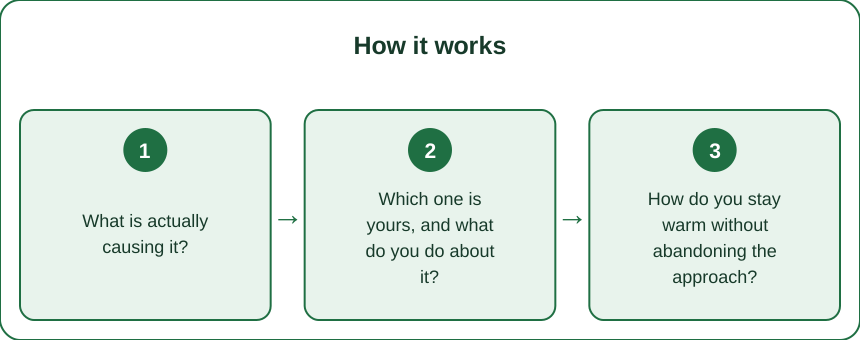
What is actually causing it?
Four mechanisms, in roughly the order they appear.
1. Fluid and electrolyte loss, in the first two weeks. Cutting carbohydrate depletes glycogen, and each gram of glycogen holds around three grams of water. That produces rapid fluid loss along with sodium, potassium, and magnesium. Lower blood volume means less peripheral circulation, and less peripheral circulation means cold hands and feet. This is the most common cause early on and the easiest to fix.
2. Reduced thyroid hormone conversion. The body converts T4 into the more active T3, and that conversion is sensitive to both carbohydrate intake and total energy availability. Low carbohydrate intake, particularly combined with an energy deficit, can lower T3 levels - and T3 is a primary regulator of metabolic rate and heat production. This is a real, documented effect and it is the reason feeling cold is such a consistently reported experience among people eating very low carb for extended periods.
3. An overall calorie deficit. This one has nothing to do with carbohydrate specifically. In a sustained deficit, the body reduces non-essential energy expenditure, and heat production is high on that list. Feeling cold is one of the most reliable subjective signs of an aggressive deficit, regardless of diet composition.
4. Less thermic effect from food. Digesting food produces heat. Large meals produce a noticeable amount of it, and low-carb eating often reduces meal size and eating frequency. This is a smaller contributor than the others and it explains why the effect is most noticeable between meals.
The useful distinction: cause one is a transition effect. Causes two and three mean you are under-fuelling. Those need different responses.
Which one is yours, and what do you do about it?
Timing and pattern separate them fairly clearly.
If it started in the first two weeks and you also have fatigue, headaches, and lightheadedness on standing: this is the electrolyte and fluid picture. Add sodium - 3 to 5 grams a day is the commonly used range on low carb, which is more than most people expect and is the single most effective fix. Add potassium through leafy greens, avocado, and salmon, and magnesium through nuts, seeds, and greens. Drink to thirst rather than forcing volume. Most people feel substantially better within a couple of days.
If it developed gradually over months and you also notice hair thinning, dry skin, low mood, constipation, or a stalled period: this is the thyroid and energy availability picture, and it is the one that matters. The fix is not more salt. It is more food, and specifically more carbohydrate. Adding 50 to 100 grams of carbohydrate a day, particularly around training, resolves it for many people without abandoning the approach entirely.
If you are dieting hard and losing weight quickly: the deficit is doing it. Slow the rate of loss to something sustainable and reassess in two weeks.
If it is mild, only between meals, and nothing else is wrong: it is probably the thermic effect and it is not a problem.
Red flags that mean see a clinician rather than adjust your diet: cold intolerance with significant fatigue, unexplained weight change, hair loss, a very slow heart rate, or a menstrual cycle that has stopped. Thyroid disorders are common, they are easily tested, and they need proper diagnosis rather than dietary guesswork. This is general information, not medical advice.

How do you stay warm without abandoning the approach?
Adjust the diet first, then manage the symptom.
Dietary adjustments, in order of impact:
- Salt properly. Not a pinch - actively salt food, and consider a broth or an electrolyte drink daily during the first month.
- Eat enough total energy. Low carb suppresses appetite for most people, which means under-eating happens by accident rather than by intention. Track for three days if you are unsure; the number is frequently lower than people assume.
- Add back some carbohydrate. Cycling carbohydrate up on training days, or simply moving from very low to moderately low, resolves the cold complaint for a lot of people while keeping most of the benefits they were after.
- Do not go very low carb during a hard deficit. Stacking a large calorie deficit onto very low carbohydrate is what produces the strongest thyroid and cold effects. Pick one to be aggressive about.
Managing the symptom itself:
- Strength training. Preserving muscle preserves metabolic rate and heat production, and it is protective during any deficit.
- Warm drinks and warm meals genuinely help, mostly acutely rather than systemically.
- Layer, especially extremities. Peripheral circulation is the affected part, so socks and sleeves do more than a heavier coat.
- Move regularly. Circulation to the hands and feet responds quickly to movement, and cold complaints are usually worst in people who sit still for long stretches.
- Watch the caffeine. It constricts peripheral blood vessels and makes cold hands worse, which people rarely connect.
Myth vs Fact: Feeling Cold on Low Carb
Myth: Feeling cold means your metabolism is broken. Fact: Metabolic rate adapts to energy availability, which is a normal, reversible response rather than damage. It responds to eating more, usually within weeks.
Myth: It is just the adaptation phase and it always passes. Fact: The electrolyte version passes in two to three weeks. The version that comes from chronic under-eating or low T3 does not pass on its own - it persists until intake changes, and treating it as a phase to wait out is how people stay cold for a year.
Myth: Feeling cold means fat loss is working. Fact: It means energy availability is low, which is not the same thing and is not a target. Reduced heat production is one of the ways the body slows fat loss, so the sensation is closer to a warning than a scoreboard.
Myth: Low carb always lowers thyroid function. Fact: The effect depends heavily on total energy intake. Adequate calories with low carbohydrate produces much smaller changes than low carbohydrate combined with a deficit. Individual variation is also large.
Myth: More salt is dangerous. Fact: On very low carb, sodium requirements are genuinely higher because you excrete more of it, and the usual restriction advice does not straightforwardly apply. If you have high blood pressure, kidney disease, or heart failure, this needs a clinician’s input rather than a general rule.
Myth: You have to abandon low carb to fix it. Fact: For most people, adding sodium, eating enough, or moving from very low to moderately low carbohydrate resolves it. Whole-approach abandonment is rarely the required step.
FAQ: Low Carb and Cold Sensitivity Questions, Answered
How long does the cold feeling last?
The electrolyte version resolves within two to three weeks with adequate sodium. If it persists past a month or appears months in, it is a different mechanism and calls for more food rather than more patience.
Should I get my thyroid tested?
If cold intolerance comes with fatigue, hair thinning, dry skin, low mood, constipation, or menstrual changes, yes. A basic panel is inexpensive and thyroid conditions are common enough that guessing is not sensible.
How much salt is actually appropriate?
Commonly cited guidance for very low carb is 3 to 5 grams of sodium a day, which is roughly 7 to 12 grams of salt. That is well above general population advice and it is specific to this context. Check with a clinician if you have blood pressure, kidney, or heart concerns.
Why are my hands and feet worse than the rest of me?
Peripheral circulation is reduced first when blood volume drops or when the body conserves heat. Extremities are the first to go and the first to recover once fluid and food are adequate.
Does this happen on all low carb diets or just keto?
It is more pronounced the lower the carbohydrate intake, so very low carb and ketogenic approaches report it most. Moderate low carb around 100 to 150 grams a day produces it far less often.
TL;DR:
- Four causes: early fluid and electrolyte loss, reduced T3 conversion, an overall calorie deficit, and less thermic effect from food.
- Cold in the first two weeks with headaches and fatigue means sodium. 3 to 5 grams a day is the usual range on very low carb.
- Cold that develops over months alongside hair thinning, dry skin, or cycle changes means under-fuelling, not under-salting.
- Do not stack a large calorie deficit on top of very low carbohydrate. Pick one to be aggressive about.
- Persistent cold intolerance with other symptoms is worth a thyroid panel rather than another dietary tweak.
Mild and between meals is fine. Cold all day is your body telling you the intake is too low.
Keep Reading
This article is for general informational purposes only and is not medical advice. Always consult a qualified health professional for guidance specific to you.