Why Low Carb Feels Harder in Hot Weather Than It Did in Winter
Quick Answer: Low-carb eating increases sodium and water loss - lower insulin means the kidneys hold on to less sodium, and each gram of glycogen you are not storing takes about 3 grams of water with it. In hot weather you are already losing sodium and water through sweat. The two losses stack, and the result is the headaches, lightheadedness, cramps, and flat workouts people describe as the diet stopping working.
It has not stopped working. You are low on sodium and fluid, and both are easy to fix.
Here is what is actually happening and what to change.

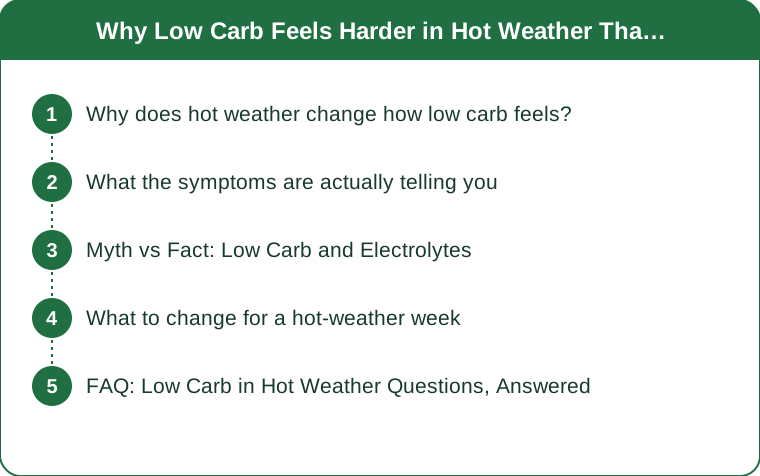
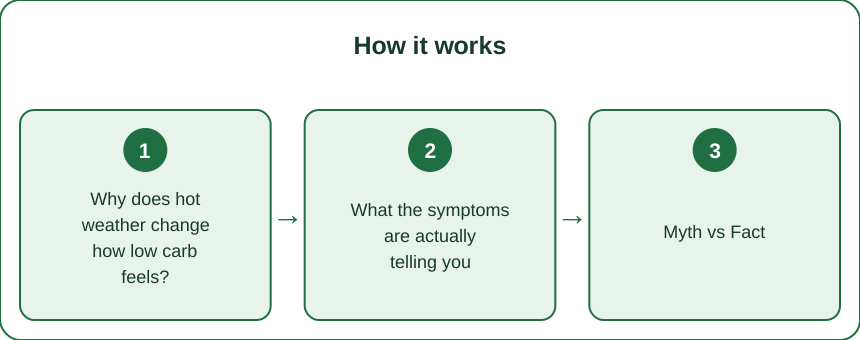
Why does hot weather change how low carb feels?
Two separate fluid losses arriving at once, neither of which is obvious.
Low carb increases baseline losses. Lower carbohydrate intake means lower insulin, and insulin signals the kidneys to retain sodium. Less insulin means more sodium excreted, and water follows sodium. This is the well-documented mechanism behind the first-week water loss everyone experiences.
Glycogen holds water. Each gram of stored glycogen binds roughly 3 grams of water. Running lower glycogen stores means carrying substantially less water - useful for the scale, unhelpful for heat tolerance.
Then summer adds sweat. Sweat contains sodium - typically 500 to 1,500mg per litre, and considerably more in some people. An hour of hot-weather exercise can cost 1 to 2 litres. You are now losing sodium through two channels while eating a way of eating that already retains less of it.
Your blood volume drops. Less total body water means lower plasma volume, which means your heart works harder for the same output. This is why the same run feels harder - your cardiovascular system is genuinely operating at a disadvantage, not your motivation.
And thermoregulation suffers. Sweating is your cooling system and it requires water. Lower total body water means less available for cooling, which is why low-carb dieters often report feeling the heat more than they used to.
What the symptoms are actually telling you
The symptom pattern is specific enough to diagnose yourself, most of the time.
Headache, especially late afternoon. The most common low-sodium signal, and it usually responds to salt and fluid within 30 minutes. If it does, that was the cause.
Lightheadedness on standing. Low plasma volume means blood pressure drops momentarily when you stand. Distinctly a fluid-and-sodium signal rather than a blood sugar one.
Cramps, particularly at night or during exercise. Sodium and magnesium losses both contribute, and cramping in hot weather on low carb is common enough to be predictable.
Flat workouts with a high heart rate. Same pace, higher heart rate, more perceived effort. That is reduced plasma volume, and it is the sign most often misread as being out of shape.
Salt cravings. Worth listening to. A genuine craving for salty food during hot weather on low carb is usually accurate information.
What is not this: persistent fatigue that does not respond to sodium and fluid within a day, dizziness with palpitations, confusion, or symptoms that worsen despite the fixes below. Those warrant a conversation with a clinician rather than more electrolytes - particularly if you take blood pressure medication, have kidney issues, or have a heart condition. Sodium advice is not universal, and this is general information rather than medical advice.

Myth vs Fact: Low Carb and Electrolytes
Myth: Drinking more water fixes it. Fact: Water alone can make it worse - you dilute the sodium you already have. Fluid plus sodium is the fix, and this is the single most common mistake people make when they feel unwell on low carb in the heat.
Myth: Everyone should be restricting salt. Fact: General population salt advice is aimed at a high-carb, high-processed-food context where insulin is retaining sodium efficiently. On low carb, sodium needs are genuinely higher - often 4 to 6 grams of sodium daily in the low-carb literature, versus general guidance of around 2. This does not apply if you have hypertension or kidney disease, where individual advice matters.
Myth: The first-week fatigue means low carb does not suit you. Fact: Most of what is called the carb flu is sodium and water depletion, and it typically resolves within days once addressed. Judging the approach before fixing the electrolytes is judging the wrong thing.
Myth: Sports drinks are the answer. Fact: Most are built around sugar with modest sodium - fine if you want the carbohydrate, counterproductive if you do not. Salt in water, or an unsweetened electrolyte mix, delivers the sodium without the rest.
Myth: You need expensive electrolyte products. Fact: A quarter teaspoon of table salt in a glass of water provides roughly 575mg of sodium for essentially nothing. Commercial products are convenient and better tasting; they are not more effective.
What to change for a hot-weather week
Most of this works within a day or two, which is a useful diagnostic in itself.
Sodium, first and most important:
- Add 1 to 2 grams of sodium daily above your usual intake during hot weather - that is roughly half to one teaspoon of salt spread across the day
- Broth or salted water in the morning. A cup of broth is the most palatable delivery method and it front-loads the day
- Salt your food deliberately, and salt it more than feels normal
- Around exercise: 300 to 600mg of sodium per hour of hot-weather training, taken with fluid
Fluid, second:
- Drink to thirst plus a bit, not to a fixed target. Overdrinking plain water while sodium-depleted is the failure mode
- Check urine colour - pale straw, not clear. Completely clear urine in this context often means overdiluted rather than well hydrated
The other two electrolytes:
- Potassium: avocado, leafy greens, salmon, mushrooms. Easy to get from food on low carb and worth being deliberate about
- Magnesium: nuts, seeds, dark leafy greens. Supplementation is reasonable if cramps persist - discuss with a clinician if you take medication
And two structural adjustments for summer:
- Train earlier or later. Hot-weather sessions cost far more fluid and sodium than the same session in cool conditions
- Consider a modest carbohydrate increase around hard training in summer. Some glycogen means some retained water, and there is nothing virtuous about being maximally depleted in August. Adapting the approach to the season is not failing at it
FAQ: Low Carb in Hot Weather Questions, Answered
How quickly should I feel better after adding sodium?
Often within 30 to 60 minutes for a headache or lightheadedness, and within a day or two for the general flatness. If nothing changes after two days of adequate sodium and fluid, the cause is probably something else and worth investigating.
Does this mean low carb is unsuitable for summer?
No, it means it needs a seasonal adjustment. The people who struggle are almost always the ones running the identical winter protocol in August without changing anything about sodium, fluid, or training timing.
Is there a risk of taking too much sodium?
For most healthy people with functioning kidneys the body excretes what it does not need, and thirst and taste regulate intake reasonably well. If you have high blood pressure, kidney disease, heart failure, or take related medication, this advice does not apply to you without a clinician’s input.
Why do my workouts feel worse than my daily life does?
Because exercise multiplies both losses at once - sweat rate climbs and plasma volume matters most under cardiovascular load. Front-loading sodium before a hot session rather than after usually makes the largest single difference.
TL;DR:
- Low carb raises sodium and water loss, and hot weather adds a second loss on top
- Headaches, lightheadedness, cramps, and high heart rate at easy paces are the classic signals
- Water alone makes it worse - sodium plus fluid is the fix
- Add 1 to 2g of sodium daily in the heat, plus 300 to 600mg per hour of hot training
- Adjusting carbs upward around summer training is a sensible seasonal change, not a failure
If you have felt flat all week, have a cup of salted broth and see how you feel in an hour. That answer is usually the whole diagnosis.
Keep Reading
This article is for general informational purposes only and is not medical advice. Always consult a qualified health professional for guidance specific to you.