Why Low-Carb Energy Crashes Happen (and How to Actually Stop Them)
Quick Answer: Low-carb energy crashes are usually caused by inadequate electrolyte intake, insufficient overall calories, or the transition period before the body adapts to using fat for fuel. Adding electrolytes, eating enough total calories, and giving the adaptation period 1-2 weeks resolves most crashes.
Feeling wiped out a few days into a low-carb diet doesn’t necessarily mean it’s the wrong approach for you — it usually points to one of a few specific, fixable gaps.

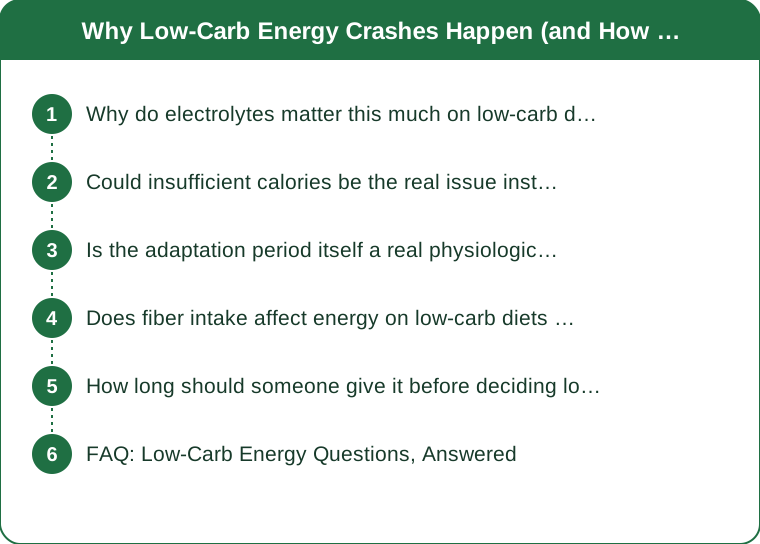
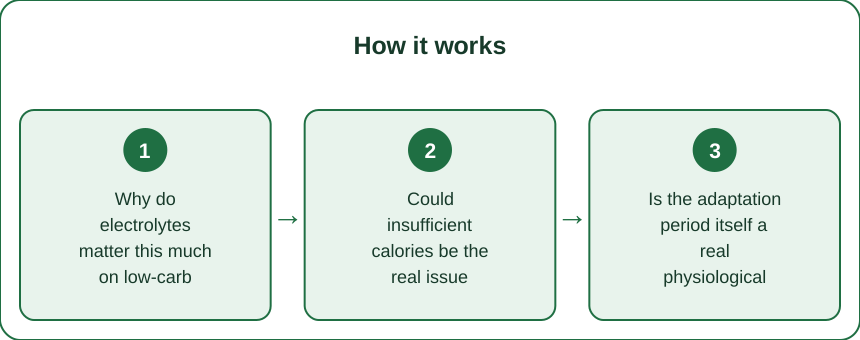
Why do electrolytes matter this much on low-carb diets?
Lower carb intake reduces the body’s water and sodium retention since carbohydrate stores hold water, so without deliberately replacing sodium, potassium, and magnesium, fatigue and headaches are common in the first week or two.
Could insufficient calories be the real issue instead of carbs specifically?
Yes — cutting carbs often accidentally cuts total calories too if fat and protein aren’t increased to compensate, and a calorie deficit alone, independent of macronutrient ratio, reliably causes fatigue.
Is the adaptation period itself a real physiological factor?
It is — the body takes roughly one to two weeks to upregulate fat-burning enzymes and become more efficient using fat and ketones for energy, and energy dips during this transition are common even with adequate calories and electrolytes.

Does fiber intake affect energy on low-carb diets too?
Indirectly — inadequate fiber from cutting most carb sources can affect digestion and blood sugar stability, so prioritizing low-carb, high-fiber vegetables helps avoid an additional source of energy fluctuation.
How long should someone give it before deciding low-carb isn’t working for them?
Most fatigue tied to adaptation resolves within two to three weeks if electrolytes and calories are adequate; persistent fatigue beyond that point is worth reassessing rather than pushing through indefinitely.
FAQ: Low-Carb Energy Questions, Answered
Do electrolyte supplements actually help, or is food enough?
Both can work — bone broth, salted foods, and electrolyte-specific supplements are all reasonable ways to address the sodium and potassium gap that carb reduction creates.
Is exercise performance expected to dip during the adaptation period?
Some temporary dip in high-intensity performance is common during adaptation, typically improving as the body becomes more fat-adapted over a few weeks.
Should everyone expect an energy crash starting low-carb?
Not everyone experiences it, and severity varies significantly based on how the transition is managed, particularly electrolyte and calorie adequacy.
TL;DR:
- Electrolyte loss from reduced water retention is a leading cause of low-carb fatigue
- Accidentally under-eating total calories, not just carbs, often compounds the issue
- A one-to-two week fat-adaptation period is a normal, temporary contributor
- Persistent fatigue past two to three weeks is worth reassessing, not pushing through
Most low-carb energy crashes trace back to specific, correctable gaps rather than the approach itself being wrong for everyone.
Keep Reading
This article is for general informational purposes only and is not medical advice. Always consult a qualified health professional for guidance specific to you.