Why Two Drinks Feel Like Four on a Low-Carb Diet
Quick Answer: On a low-carb diet, depleted glycogen means less water retention and a smaller volume for alcohol to distribute into, your liver is busy with ketone and glucose production, and you are often eating less alongside the drink. The result is a faster, stronger effect from the same amount. Plan for roughly half your previous intake, eat beforehand, and pay serious attention to electrolytes.
You had two glasses of wine like you always do and felt like you had four.
That is a well-documented and fairly well-understood effect, and knowing why makes it much easier to manage.

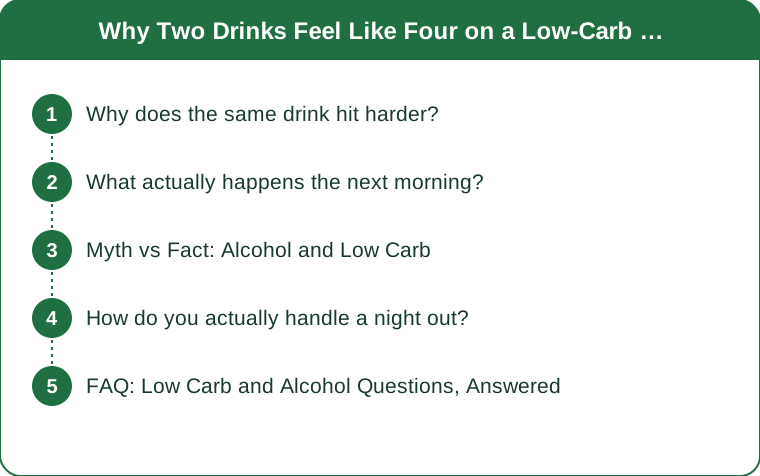
Why does the same drink hit harder?
Three mechanisms, working together.
Lower body water means a smaller distribution volume. Each gram of stored glycogen holds roughly three to four grams of water. Depleting glycogen on a low-carb diet releases several pounds of water in the first week or two — that is the famous rapid initial weight loss. Alcohol distributes through body water, so less body water means a higher blood alcohol concentration from the same drink. This is the largest single factor.
Your liver is already occupied. In a low-carb state, the liver is doing more gluconeogenesis and ketone production than usual. Alcohol metabolism is also a liver job and it takes priority — the liver processes alcohol before almost anything else. That means alcohol clears at its normal rate but everything else backs up behind it, including glucose production.
You are probably drinking on a lighter stomach. Low-carb eating tends to be more satiating, so people eat less and often less frequently. Food, particularly carbohydrate and fat, slows gastric emptying and moderates the rise in blood alcohol. Without it, the peak comes faster and higher.
A fourth contributor worth knowing: many low-carb drinkers switch to spirits with a zero-calorie mixer, which delivers alcohol faster than beer or wine does. The drink type changed at the same time as the diet, and it is easy to attribute all of it to the diet.
What actually happens the next morning?
The hangover profile shifts, not just the intensity.
Dehydration compounds an existing deficit. Low-carb diets already increase water and sodium loss — that is why electrolyte supplementation is standard advice in the first weeks. Alcohol is a diuretic on top of that. The combination is what produces the disproportionate headache and fatigue.
Electrolyte loss is the underrated part. Sodium, potassium, and magnesium all drop faster in this combination, and low magnesium in particular contributes to the headache and the poor sleep. If you already supplement electrolytes on low carb, alcohol nights need more, not the same.
Blood sugar can drop lower than usual overnight. With the liver prioritizing alcohol clearance, glucose production is suppressed at exactly the point where you have limited glycogen to draw on. For most people this manifests as feeling shaky, unusually hungry, or waking at 3am. For anyone using glucose-lowering medication, this is a genuine safety issue rather than a comfort one.
Sleep quality drops more than usual. Alcohol fragments sleep architecture at any time; combined with the low blood sugar wake-up, low-carb drinkers frequently report worse sleep from less alcohol.
And ketosis pauses. Alcohol metabolism takes priority, which temporarily interrupts fat oxidation. This is not a permanent setback, and it does resolve within a day, but it explains why a night out is followed by a slower-than-expected morning.

Myth vs Fact: Alcohol and Low Carb
Myth: Low-carb drinks like spirits with soda are fine because they have no carbs. Fact: The carbohydrate content is the least important variable here. The alcohol itself is what causes the effects described above, and a zero-carb spirit delivers it faster than beer would. Carb-counting the drink misses the point entirely.
Myth: You develop a lower alcohol tolerance permanently. Fact: Nothing about your alcohol-metabolizing enzymes changed. The distribution volume changed. Reintroduce carbohydrate and the effect reverses within days — which is worth knowing if you are transitioning off low carb, because the drink you calibrated to will suddenly feel weaker.
Myth: Alcohol converts to fat and kicks you out of the diet. Fact: Alcohol is not stored as fat in any meaningful quantity. What happens is that fat oxidation pauses while alcohol is being cleared, which temporarily halts progress rather than reversing it.
Myth: Wine is the safest low-carb option. Fact: Dry wine is a reasonable choice on carbohydrate grounds, and the effect described here applies to it identically. There is no drink that avoids the mechanism.
Myth: Eating carbs before drinking defeats the purpose of the diet. Fact: A meal before drinking is a sensible harm-reduction step, and one meal does not undo a diet. The people who get into difficulty are the ones treating this as an all-or-nothing rule on a night out — which is precisely the situation where flexibility matters most.
How do you actually handle a night out?
Practical and specific, because the general advice does not account for the changed physiology.
Halve your usual amount, at least at first. Whatever you drank comfortably before, start at half and reassess. This is the single most useful adjustment and it is entirely about the changed distribution volume.
Eat beforehand, including some fat and protein. This slows absorption and moderates the peak. It also reduces the overnight blood sugar drop.
Front-load electrolytes. Sodium, potassium, and magnesium before and after, in larger amounts than a normal low-carb day. This addresses the mechanism that causes most of the next-morning misery.
Alternate with water, deliberately. One glass of water per drink, and more than that if it is warm out. Dehydration is starting from further behind than it would on a normal diet.
Slow the pace. The faster peak means the same drinks spread over four hours land very differently from the same drinks over ninety minutes.
Do not drive on your old calibration. This is the point that matters most. Your blood alcohol from the same number of drinks is genuinely higher, and any intuition you built before starting the diet is now wrong.
This is general information, not medical advice. If you take glucose-lowering medication, have liver disease, or have any condition affected by alcohol, discuss this with your doctor — the interaction between alcohol and a low-carbohydrate diet is not trivial in those contexts.
FAQ: Low Carb and Alcohol Questions, Answered
Does this go away as I adapt?
Partially. Some of the initial effect is tied to the rapid glycogen and water loss of the first weeks, which stabilizes. But as long as you are maintaining low glycogen stores, the reduced distribution volume persists — so expect a permanently lower tolerance while you are eating this way, not a temporary one.
Which drinks are the best choice?
On carbohydrate grounds: dry wine, spirits with zero-carb mixers, and light beers in that rough order. On effect grounds, the choice matters less than the pace and the food. A dry wine sipped with a meal is easier on you than a spirit and soda on an empty stomach, regardless of the carb counts.
Should I just avoid alcohol on low carb?
That is a personal call and there are good reasons to. If you do drink, the point of this article is that you should recalibrate rather than assume your previous habits transfer. Most of the bad experiences people report come from applying old intuitions to a changed system rather than from the alcohol itself.
TL;DR:
- Depleted glycogen means less body water, so the same drink produces a higher blood alcohol concentration
- Your liver prioritizes alcohol over glucose production, which can drop blood sugar lower than usual overnight
- Start at half your previous amount, eat beforehand, and take more electrolytes than a normal low-carb day
- Any drink-count intuition you built before starting the diet is now wrong — this matters most for driving
Nothing about your tolerance failed. The math on how alcohol distributes changed, and the fix is simply to update the number you were working from.
Keep Reading
This article is for general informational purposes only and is not medical advice. Always consult a qualified health professional for guidance specific to you.