Eating Low-Carb at Parties and Restaurants Without Making It Weird
Low-carb eating gets genuinely hard the moment it leaves the kitchen and enters a restaurant table or a friend’s dinner party, where the food isn’t chosen or controlled. The goal in these settings isn’t perfect adherence, it’s a set of quiet strategies that don’t turn dinner into a production.

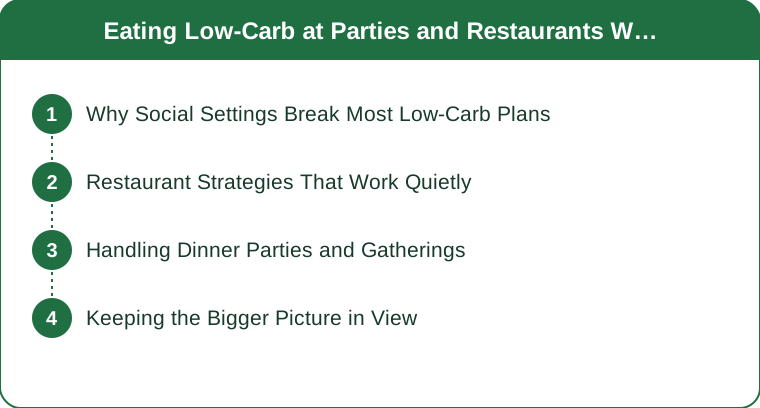
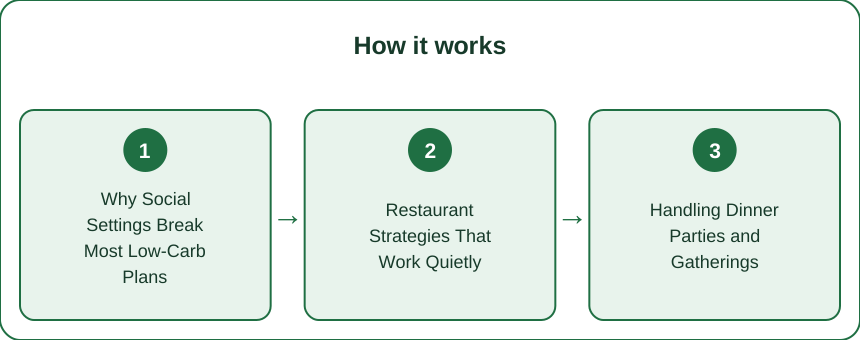
Why Social Settings Break Most Low-Carb Plans
The friction points: the the-no-control-over-menu (a restaurant or host’s menu removing the ingredient-level control that makes low-carb eating manageable at home), the the-social-pressure-to-match (an unspoken pressure to eat similarly to the group, making a visibly different order or plate feel more conspicuous than it needs to), the the-hidden-carb-sources (sauces, dressings, and shared appetizers often carrying meaningful carbs that aren’t obvious from a menu description alone).
Restaurant Strategies That Work Quietly
The low-friction tactics: the the-protein-and-vegetable-default-order (ordering a protein-and-vegetable-based dish as a default, which exists on nearly every restaurant menu without requiring special requests), the the-sub-the-starch-simple-ask (asking for a starch side to be swapped for extra vegetables, a request most servers handle without any fuss), the the-sauce-on-the-side-request (requesting sauce or dressing on the side rather than skipping it entirely, keeping flavor while controlling the actual amount consumed).

Handling Dinner Parties and Gatherings
The social approach: the the-eat-something-small-beforehand (having a small, low-carb snack before a gathering with an unpredictable menu, removing the pressure to fill up on whatever carb-heavy option is available), the the-selective-plate-not-total-avoidance (choosing to enjoy one higher-carb item genuinely wanted rather than avoiding everything, which tends to feel more sustainable than blanket restriction), the the-no-explanation-required-mindset (serving oneself a smaller portion of a starch or dessert without offering an unsolicited explanation, since most hosts don’t actually need justification).
Keeping the Bigger Picture in View
The mindset: the the-single-meal-doesnt-derail-progress (one higher-carb social meal having negligible impact on overall progress compared to the pattern of most meals), the the-consistency-beats-single-event-perfection (long-term low-carb success depending far more on typical daily eating than on getting any one social event exactly right), and the frame (social eating is easiest to navigate with a few quiet defaults — a protein-and-vegetable order, sauce on the side, and a genuinely relaxed attitude toward the occasional exception — rather than treating every gathering as a test to pass or fail.)
Low-carb eating that works fine in a controlled kitchen tends to fall apart the moment it meets a restaurant menu or a friend’s dinner table, mostly because the ingredient-level control that makes the approach manageable simply isn’t available there. The fix isn’t rigid perfectionism, it’s a handful of quiet, low-friction defaults: ordering a protein-and-vegetable dish that exists on nearly every menu, asking for a starch side to be swapped for extra vegetables, and requesting sauce on the side rather than skipping flavor entirely. At a dinner party with less menu control, a small snack beforehand and a genuinely relaxed choice to enjoy one higher-carb item actually wanted, without over-explaining a smaller dessert portion, tends to feel far more sustainable than blanket avoidance. None of this needs to be a production, because one social meal has negligible impact on overall progress compared to what gets eaten on all the ordinary days in between.
Keep Reading
This article is for general informational purposes only and is not medical advice. Always consult a qualified health professional for guidance specific to you.