Low-Carb Diets and Hair Loss: Is There Actually a Connection?
Quick Answer: Hair loss linked to low-carb dieting is usually a form of temporary shedding called telogen effluvium, triggered by the physical stress of rapid weight loss, calorie restriction, or nutrient gaps (particularly protein, iron, zinc, or biotin) rather than carbohydrate restriction itself — it typically shows up 2-4 months after the diet starts and resolves once nutrition stabilizes and the underlying trigger is corrected.
The connection between low-carb eating and shedding hair is real for some people, but the actual cause usually isn’t the carbs being cut — it’s what tends to happen alongside cutting them.

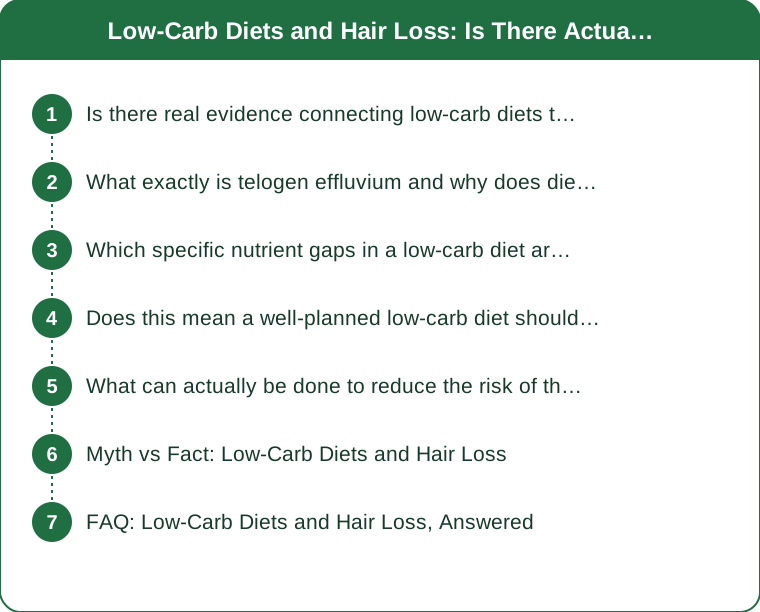
Is there real evidence connecting low-carb diets to hair loss specifically?
There’s evidence connecting rapid weight loss and significant calorie restriction — both of which commonly happen alongside starting a low-carb diet — to a recognized, temporary hair shedding pattern called telogen effluvium. It’s this broader physiological stress response, not carbohydrate restriction as an isolated factor, that’s the more accurate way to describe the actual mechanism at play.
What exactly is telogen effluvium and why does dieting trigger it?
Hair follicles cycle through growth, resting, and shedding phases, and significant physical stress — including rapid weight loss, illness, or major calorie deficits — can push an unusually large percentage of follicles into the shedding phase simultaneously, rather than the normal, staggered pattern. This shows up as noticeably increased shedding, typically 2-4 months after the triggering stress began, which is part of why people often don’t immediately connect it back to a diet change that started months earlier.
Which specific nutrient gaps in a low-carb diet are most often implicated?
Protein, iron, zinc, and biotin are the nutrients most commonly flagged when a low-carb or restrictive diet is linked to hair shedding, since deficiencies or significant reductions in any of these directly affect hair follicle health and the growth phase of the hair cycle. A low-carb diet done with adequate protein and micronutrient intake carries meaningfully lower risk than one that inadvertently restricts these nutrients alongside the carbohydrates.

Does this mean a well-planned low-carb diet should be expected to cause hair loss?
No — a low-carb diet that maintains adequate protein, iron, zinc, and overall calorie sufficiency is not inherently linked to hair loss in the research; the issue arises specifically when the diet change also happens to create a nutrient gap or a rapid, significant calorie deficit. This distinction matters, since it points toward a fixable dietary gap rather than carbohydrate restriction itself being the problem.
What can actually be done to reduce the risk of this happening when starting a low-carb diet?
Prioritizing adequate protein intake from the start (rather than letting it drop along with the carbohydrates) is one of the more protective steps, since protein deficiency is one of the more directly implicated triggers for telogen effluvium specifically. Pairing the diet change with iron- and zinc-rich foods (red meat, leafy greens, pumpkin seeds, shellfish) and avoiding an overly aggressive calorie deficit in the first few weeks — easing into the changes over 2-3 weeks rather than cutting everything at once — also meaningfully reduces the physiological shock that tends to trigger the shedding response in the first place.
For anyone with a personal or family history of hair thinning, starting a restrictive diet more gradually, and monitoring energy and hair changes along the way, is a reasonable extra precaution worth taking before diving into a significant carbohydrate cut all at once.
Myth vs Fact: Low-Carb Diets and Hair Loss
Myth: Cutting carbs directly causes hair to fall out. Fact: The more accurate connection is through calorie restriction, rapid weight loss, and nutrient gaps that sometimes accompany a low-carb diet, not carbohydrate reduction as an isolated cause.
Myth: Hair loss from dieting is permanent. Fact: Telogen effluvium is typically temporary and reversible once the underlying nutritional or physiological trigger is corrected, usually resolving over the following months.
FAQ: Low-Carb Diets and Hair Loss, Answered
How long does diet-related hair shedding typically last once nutrition is corrected?
Many people see improvement within a few months of correcting the underlying nutrient gap or calorie deficit, though full regrowth to previous density can take 6-12 months given the hair growth cycle’s natural pace.
Should someone stop a low-carb diet entirely if they notice increased shedding?
Not necessarily — addressing likely nutrient gaps (protein, iron, zinc) and moderating the pace of weight loss is often enough, though persistent or severe shedding warrants a conversation with a doctor rather than guessing at the cause.
Is it worth getting bloodwork done if hair shedding starts during a low-carb diet?
Yes, generally a reasonable step — checking iron, zinc, and thyroid markers specifically can identify a correctable deficiency rather than relying on assumption alone, and this is worth discussing with a doctor. This is general information, not medical advice.
TL;DR:
- Hair shedding tied to low-carb diets is usually telogen effluvium, not carb restriction itself
- Rapid weight loss, calorie deficits, and nutrient gaps are the more accurate underlying triggers
- Protein, iron, zinc, and biotin gaps are the most commonly implicated nutrients
- A well-planned low-carb diet with adequate nutrition isn’t inherently linked to hair loss
The carbs usually aren’t the real culprit — what matters more is whether protein, iron, and overall calorie intake stayed adequate through the diet change. This is general information, not medical advice.
Keep Reading
This article is for general informational purposes only and is not medical advice. Always consult a qualified health professional for guidance specific to you.