Eating Fewer Carbs Without Wrecking Your Training
Reducing carbohydrate and training hard are not incompatible, but they compete in one specific place — the sessions that depend on stored glycogen. Cutting carbs uniformly across the week is what makes people conclude that low carb ruined their training. Here is why they conflict, how to distribute carbs, and how to apply it.


Why Low Carb and Hard Training Conflict
Fuel for the hardest work: the the-high-intensity-work-runs-on-glycogen (the hardest efforts depending on stored carbohydrate from the and-exercise logic — the intensity-runs-on-glycogen), the the-easy-work-is-far-less-dependent (the low-intensity work being much less carbohydrate-dependent from the and-exercise logic — the easy-work-less-dependent), the the-uniform-restriction-hits-the-wrong-sessions (the cutting carbs evenly starving the sessions that need them from the and-exercise logic — the uniform-restriction-misses), the the-performance-drops-and-gets-blamed-on-the-diet (the the resulting decline being attributed to low carb generally from the is-it-right-for-you logic — the blamed-on-the-diet), the the-adaptation-takes-time-too (the some adjustment period being normal from the is-it-right-for-you logic — the adaptation-period), and the reframe (the low-carb training problem as distribution rather than total — uniform restriction starving exactly the sessions that depend on glycogen).

How to Distribute Carbs
Putting them where they work: the the-more-carbohydrate-on-hard-training-days (the concentrating carbohydrate around demanding sessions from the and-exercise logic — the more-on-hard-days), the the-fewer-on-rest-and-easy-days (the reducing intake when demand is lower from the and-exercise logic — the fewer-on-easy-days), the the-time-them-around-the-session (the placing carbohydrate before and after training from the and-exercise logic — the time-around-session), the the-do-not-train-hard-fasted-and-low-carb (the combining both being the specific failure mode from the and-exercise logic — the not-both-at-once), the the-keep-protein-consistent (the protein staying steady regardless of carbohydrate from the is-it-right-for-you logic — the protein-consistent), the the-vegetables-and-fibre-throughout (the fibre intake being maintained on lower days from the snacks-guide logic — the fibre-throughout), the the-adjust-based-on-performance (the training quality being the feedback signal from the and-exercise logic — the performance-is-feedback), and the the-a-lower-carb-day-is-not-a-zero-carb-day (the reduction not meaning elimination from the lower-carb-without-misery logic — the lower-not-zero).
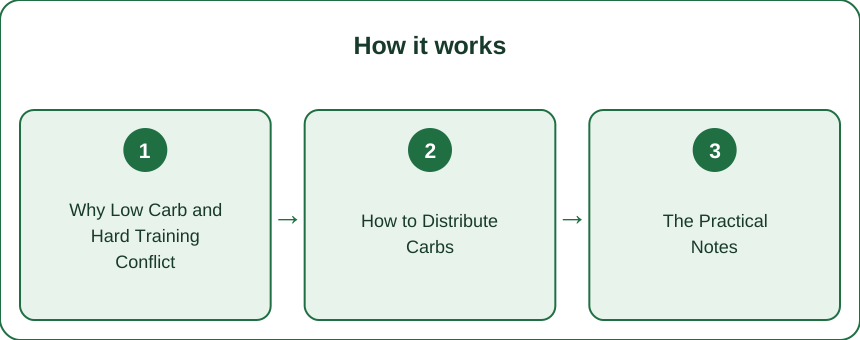
The Practical Notes
Making it sustainable: the the-do-not-cut-and-train-hard-in-the-same-week (the avoiding simultaneous dietary and training changes from the is-it-right-for-you logic — the not-both-changes-at-once), the the-expect-an-adjustment-period (the a few weeks of adaptation being normal from the is-it-right-for-you logic — the adjustment-period), the the-watch-for-under-fuelling-signs (the fatigue, poor sleep and stalled progress signalling too little from the and-exercise logic — the under-fuelling-signs), the the-it-does-not-suit-every-sport (the some activities being poorly suited to low carbohydrate from the and-exercise logic — the not-for-every-sport), the the-it-is-not-required-for-fat-loss (the low carbohydrate not being necessary for weight management from the is-it-right-for-you logic — the not-required-for-fat-loss), the the-sustainability-decides-everything (the an approach you can maintain outperforming an optimal one you cannot from the lower-carb-without-misery logic — the sustainability-decides), the the-see-a-provider-if-you-have-conditions (the medical conditions requiring professional guidance from the is-it-right-for-you logic — the see-a-provider), and the frame (the low carbohydrate with training as a distribution problem — more around hard sessions, less on easy days, never combined with fasted hard training. Put more carbohydrate around your hard sessions and less on easy days, never train hard fasted and low carb, and judge it by your training quality. This is general information, not medical advice.)
Reducing carbohydrate and training hard are not incompatible, but they compete in one specific place — the sessions that depend on stored glycogen. They conflict because high-intensity work runs on glycogen, easy work is far less dependent, uniform restriction hits the wrong sessions, performance drops and gets blamed on the diet, and adaptation takes time. Distribute carbs by having more on hard training days, fewer on rest and easy days, timing them around the session, never training hard fasted and low carb, keeping protein consistent, maintaining fibre, adjusting based on performance, and remembering a lower-carb day is not a zero-carb day. Practically, do not cut and train hard in the same week, expect an adjustment period, watch for under-fuelling signs, and let sustainability decide. This is general information, not medical advice.
Keep Reading
This article is for general informational purposes only and is not medical advice. Always consult a qualified health professional for guidance specific to you.